I wanted to write this for World Reading Day on the 23rd.
I’m a little late—but perhaps that’s fitting. Artists rarely move exactly on schedule.
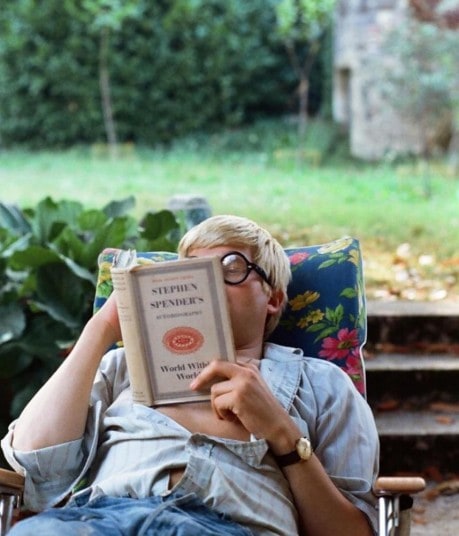
Still, it feels like the right moment to talk about something that quietly shapes how we work, yet is rarely discussed directly:
what we carry into the studio with us.
The Silent Trap
In most formal training, we begin as observers.
We learn to paint what is in front of us—a model, a still life, a photograph. We are taught to look carefully, to measure, to translate what we see into marks.
This training is valuable. It builds discipline and sensitivity.
But it also contains a subtle trap.
Over time, many artists develop what might be called a reference dependency. The work functions as long as something is present to look at. But once the model leaves, or the screen goes dark, the imagination falters.
The transition from recording to creating is one of the most difficult shifts in an artist’s development. It is the movement from being a reporter of reality to becoming its author.
And that shift does not come from more hours at the easel.
It comes from something less visible, but far more decisive:
an internal library.
Input and Interpretation
When we feel stuck without a reference, it is rarely a lack of talent. More often, it is a lack of input.
If the only source of information is what we see, then the work can only become a description of what is already there.
Some artists move beyond this by drawing from outside the studio.
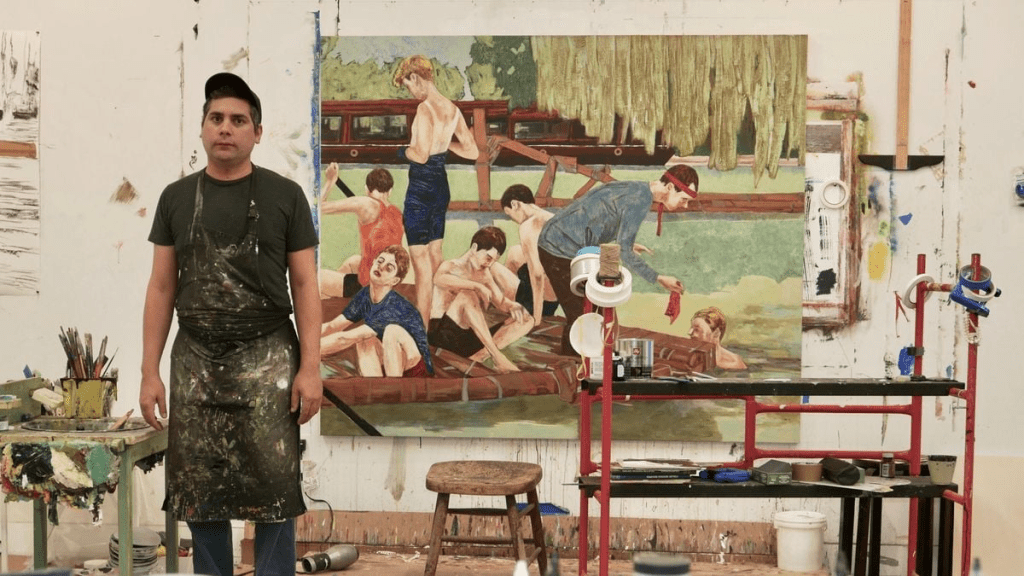
Take Hernan Bas. His paintings are not built from direct observation alone, but from a carefully constructed atmosphere. He has spoken about influences as varied as the decadent prose of Oscar Wilde and the theatrical, almost surreal energy of 1980s music videos. His work exists at the intersection of these references—a mood shaped as much by literature and culture as by visual experience.
Similarly, Mamma Andersson constructs interiors that feel less like rooms and more like stages. Her paintings draw from the psychological tension of Nordic plays and folklore. What we see is not simply a place, but a memory being performed.
These artists are not recording objects.
They are constructing a logic—an internal coherence built from what they have absorbed.
Curation: Starting Small
Building an internal library does not require encyclopedic knowledge. It begins with selection.
Start with one book.
Not to analyze it exhaustively, but to spend time inside it.
Writers like Haruki Murakami or Italo Calvino offer a useful entry point. They do not simply describe scenes; they construct relationships—between object and environment, between the ordinary and the strange.
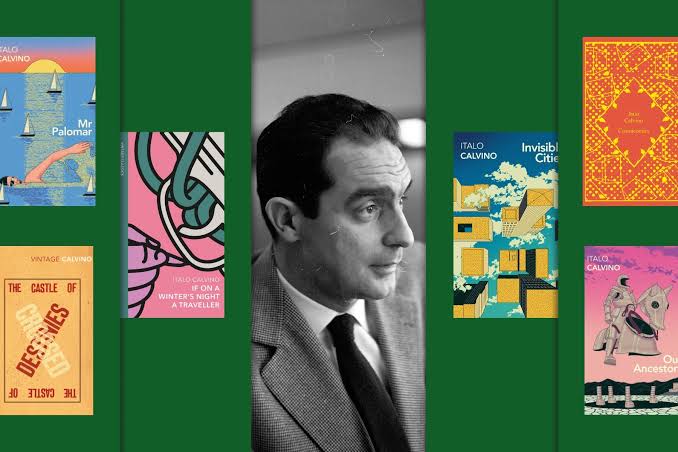
In Murakami’s work, a character may encounter something impossible, yet the world around them remains tactile: the smell of rain on pavement, the chill of a glass in hand. The unreal is anchored in the undeniable.
For an artist, this is a crucial lesson.
Believability does not come from adding more detail. It comes from how a subject exists within its atmosphere.
Alongside literature, it is equally important to understand how artists are working today.
Publications like Vitamin D: New Perspectives in Drawing or Landscape Painting Now provide a snapshot of contemporary practice. They do not prescribe a correct approach; instead, they reveal a range of possibilities—how surfaces are treated, how marks are used, how space is negotiated.
They offer a kind of visual fluency: a sense of the language currently being spoken in painting.
From Page to Canvas
The question then becomes: how does reading translate into making?
The answer lies in synthesis.
A line of text can function as a compositional prompt. If a passage describes light as “thin and tired,” the task is not to illustrate a lamp, but to translate that sensation—its temperature, its weight—into paint.
This requires an active engagement with what we read.
Margins become working space. Pages are marked, folded, returned to. When an idea resonates, it is noted—not as a quote to remember, but as a visual possibility: this tension feels like a sharp shadow; this stillness feels like a flattened space.
Over time, this process accumulates.
Whether working figuratively or abstractly, the artist is no longer beginning from nothing. The blank canvas is approached with a set of pre-digested ideas, ready to be reconfigured.
The Human Prompt
There is an irony in the current moment.
We often think of artificial intelligence as a purely visual system. But it does not generate images without direction. It depends on prompts—structured expressions of thought.
If there is nothing behind the prompt, nothing happens.
The same is true in the studio.
Without an internal library, there is nothing to draw from.
In a time when technical execution is increasingly accessible, the role of the artist is shifting. The value of the work lies less in how accurately something is rendered, and more in how it is interpreted.
The books we read, the music we absorb, the references we translate—these form a perspective that cannot be automated.
Technical skill remains essential.
But it is only the engine.
The internal library is the fuel.
Closing
I missed World Reading Day by a few days.
But perhaps this is less about a date, and more about a habit.
If this gives you a different way to approach your next painting, then it has served its purpose.
